Back to
business3 min read

Unlocking Growth: How AI Can Transform Business Leadership

Explore how leaders can leverage AI strategically to drive business growth and solve complex problems effectively.

19m

Episode audio

3m

This article

16m

Time you save

Sumly listened to the whole episode and wrote this for you.

The Sumly effect

This article condenses 19m of audio into a 3 min read.

Sumly does this with every episode of your favorite podcasts — AI summaries, key takeaways and personalized notes, delivered automatically.

Start free — 14-day trial

In a rapidly evolving business landscape, the integration of artificial intelligence is no longer a luxury but a necessity for effective leadership. The potential of AI extends beyond mere task automation; it can fundamentally reshape how leaders think and operate.

As organizations strive for growth, understanding how to harness AI effectively becomes crucial. This article explores insights from Geoff Woods, a thought leader in AI-driven leadership, revealing how to utilize AI not just for efficiency but as a strategic partner in decision-making.

Woods emphasizes that most leaders are underutilizing AI by focusing on superficial tasks. Instead, they should shift their mindset to view AI as a tool for unlocking new growth opportunities. This perspective is vital for any business leader seeking to stay competitive in today's market.

Redefining AI's Role in Business

Many organizations view AI primarily as a means to enhance productivity. However, Geoff Woods argues that the true potential lies in using AI to tackle strategic challenges. By focusing on the most significant problems, leaders can leverage AI to drive impactful results.

Woods introduces the 80-20 principle, suggesting that leaders should concentrate on the 20% of tasks that yield 80% of the results. This approach encourages businesses to prioritize high-impact initiatives rather than getting bogged down in minor tasks.

"You can spend a lifetime majoring in the minors, which frankly is what most people do in their career."

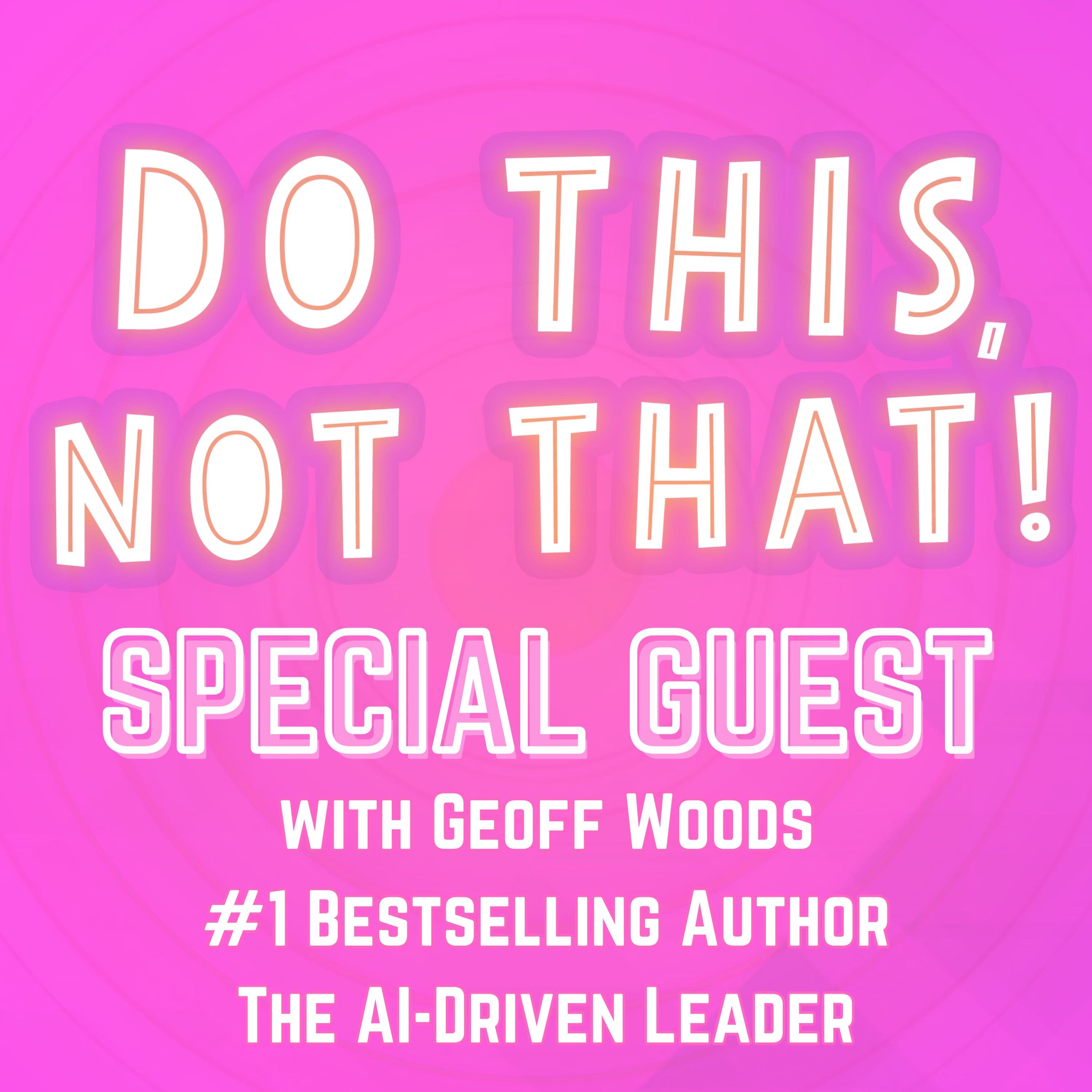
SPECIAL GUEST!! Geoff Woods 🤯 You're Prompting AI Wrong | Ep. 551"

Woods’ insights challenge the conventional thinking about AI in business. Instead of merely generating content or streamlining processes, leaders should ask: what crucial problems could be solved with AI that would unlock new levels of growth?

Implementing AI Effectively with the CRIT Framework

Woods shares a practical framework called CRIT (Context, Role, Interview, Task) that leaders can use to engage AI effectively. This structured approach helps in extracting valuable insights and solutions from AI.

Understanding the CRIT Framework

The CRIT framework consists of four components:

  • Context: Provide detailed background about the situation.
  • Role: Specify the expertise you want AI to simulate for your use case.
  • Interview: Have AI ask you questions to gain deeper insights.
  • Task: Define what you want AI to accomplish based on the gathered insights.

This method transforms the interaction with AI from a passive to an active process. Rather than merely asking AI for information, you engage it as a thought partner to refine your strategic thinking.

"If you just start prompting this way, I will take you to the top 1% of people using this for strategic thinking."

SPECIAL GUEST!! Geoff Woods 🤯 You're Prompting AI Wrong | Ep. 551"

Real-World Application: Case Study in AI Problem Solving

Woods shares a compelling case where he helped a manufacturing CEO facing bankruptcy. By using the CRIT framework, they identified the critical problem and generated innovative solutions.

After providing the necessary context and specifying the role of an investment banker, AI asked insightful questions that led to non-obvious strategies for restructuring debt. This interaction not only provided hope for the CEO but also highlighted the transformative potential of AI when applied strategically.

This example illustrates how AI can serve as a catalyst for overcoming obstacles that may seem insurmountable, ultimately leading to business recovery and growth.

Key Takeaways

  • Shift Your Mindset: View AI as a strategic partner rather than a mere tool for efficiency.
  • Focus on High-Impact Work: Use the 80-20 principle to prioritize tasks that drive significant results.
  • Leverage the CRIT Framework: Engage AI in a way that improves strategic decision-making and problem-solving.
  • Innovate with AI: Use AI to explore creative solutions for complex business challenges.

Conclusion

As businesses navigate the complexities of modern markets, the integration of AI into leadership practices offers a pathway to transformative growth. Embracing AI as a thought partner rather than a basic tool can lead to innovative solutions and enhanced strategic thinking.

The insights shared by Geoff Woods encourage leaders to rethink their approach to technology, positioning themselves to harness AI for not just operational success but also for profound organizational change.

Want More Insights?

These insights are just the beginning of what AI can do for your leadership strategy. To learn more about how to implement these concepts effectively, explore the full conversation with Geoff Woods in the full episode where deeper nuances are discussed.

For more actionable insights and strategies, visit Sumly to discover a wealth of resources designed to transform your business practices.

Ask Sumly

Have a question about this article?

Sumly digested the entire episode. Ask anything — key ideas, missing context, what the guest really meant.

Try asking

1 free question per day — no account needed.

Free to start

Enjoying this article?

Get AI-generated summaries from this podcast and thousands more — before your queue buries them.

Create free account